


Accidentally spilling paint on your laminate floor is frustrating, but the good news is that most paint stains can be removed without damaging the surface. Whether you are dealing with fresh wet paint or dried-on splatters from a decorating project, the right approach will restore your floor to its original condition.
This guide covers the best methods for removing both water-based and oil-based paint from laminate flooring, along with the tools you need, common mistakes to avoid, and how to prevent spills in the future.
Why You Should Remove Paint from Laminate Flooring Quickly
Laminate flooring has a protective wear layer that resists most household stains, but paint left to dry can bond firmly to this surface. Once dried, it becomes significantly harder to remove without risking damage to the floor beneath.
If paint is left for extended periods, it can seep into the plank edges and expansion gaps where moisture protection is weakest. This can lead to swelling, warping, or discolouration over time. Acting quickly makes removal far easier and reduces any risk of permanent marks or scratches on the laminate surface.
Tools and Materials You Will Need
Before you start, gather the following supplies so you can work efficiently without interruption:
- Plastic scraper or plastic putty knife (never use metal on laminate)
- Microfibre cloths or soft rags
- White vinegar
- Washing-up liquid
- Rubbing alcohol (isopropyl alcohol)
- Laminate-safe paint remover (acetone-free)
- Hairdryer or heat gun (low setting only)
- Protective gloves, mask, and eye protection
- Warm water and bucket
Avoid using abrasive scouring pads, steel wool, wire brushes, or acetone-based products. These can strip or scratch the laminate wear layer permanently, leaving visible marks that cannot be repaired.
How to Remove Wet Paint from Laminate Flooring
If you catch a paint spill while it is still wet, removal is straightforward regardless of the paint type.
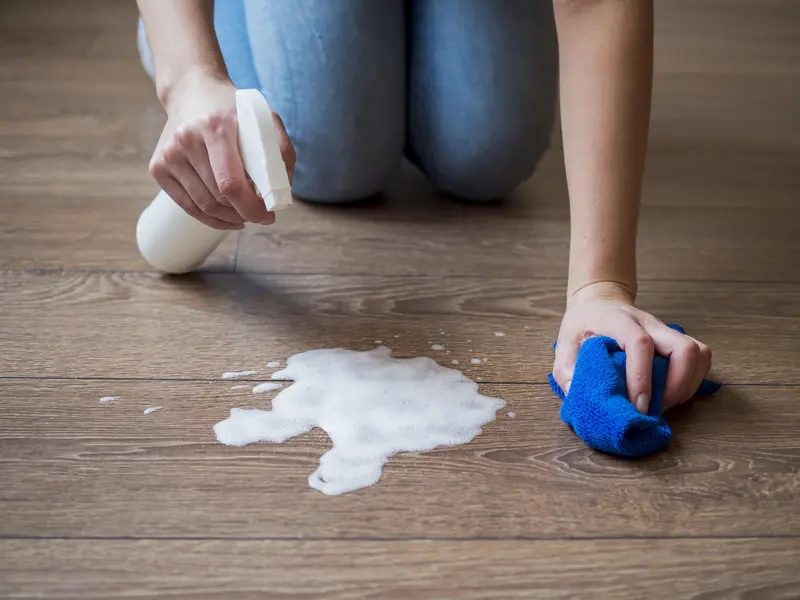
Water-based paint (emulsion, acrylic): Wipe up as much as possible with a dry cloth first, working from the edges inward to avoid spreading. Then dampen a microfibre cloth with warm water and a small drop of washing-up liquid. Wipe the area gently until all traces are gone. Dry the floor immediately to prevent moisture seeping into plank joints.
Oil-based paint (gloss, enamels): Blot up excess paint with a dry cloth without rubbing or spreading it further. Dampen a clean cloth with rubbing alcohol or white spirit and gently wipe the remaining paint. Follow up with a cloth dampened with plain water to remove any solvent residue, then dry the floor thoroughly.
How to Remove Dried Paint from Laminate Flooring
Dried paint requires more patience, but these methods work effectively without harming the laminate surface when done carefully.
Method 1: Warm Water and Vinegar Solution
Mix equal parts warm water and white vinegar in a bowl. Soak a cloth in the solution and lay it over the dried paint for 10 to 15 minutes. The mild acidity softens the paint, breaking its bond with the laminate surface.
After soaking, gently scrape with a plastic scraper held at a low angle. Wipe the area clean with a fresh damp cloth and repeat the process if any paint remains. This method works best on water-based paint that has been dried for less than a week.
Method 2: Rubbing Alcohol
Apply rubbing alcohol (isopropyl alcohol) directly to the paint stain using a cloth. Let it sit for 2 to 3 minutes to dissolve the paint. Gently rub in a circular motion until the paint begins to lift and transfer onto the cloth.
This method works on both water-based and oil-based paint and is generally safe for laminate surfaces. Swap to a clean section of cloth frequently to avoid redepositing paint. Always test on an inconspicuous area first to confirm it does not affect your particular laminate finish.
Method 3: Heat Application
Use a hairdryer on a medium heat setting, holding it 15 to 20 cm from the paint spot. Heat the area for 30 to 60 seconds until the paint softens and becomes pliable. Immediately scrape gently with a plastic scraper while the paint is still warm.
Be careful not to overheat the laminate. Excessive heat can cause warping, bubbling, or discolouration, particularly on thinner products. Keep the dryer moving constantly and never focus on one spot for more than a few seconds at a time.
Method 4: Laminate-Safe Paint Remover
For stubborn or old paint stains that resist other methods, a commercial paint remover designed for laminate or vinyl surfaces can be effective. Apply a small amount to a cloth (never pour directly onto the floor) and work it into the paint stain using gentle pressure.
Follow the product instructions carefully and ensure adequate ventilation when using any chemical remover. Wear gloves and a mask throughout the process to avoid skin contact and fume inhalation. After the paint is removed, clean the laminate floor with warm water to remove all chemical residue.
Tips for Safe Paint Removal
- Always test any cleaning product or method on a hidden area first
- Work in small sections to maintain control and avoid spreading paint
- Scrape at a low angle (almost flat to the floor) to avoid gouging
- Use plastic tools exclusively to prevent visible scratches
- Wipe up all residue and dry the floor promptly after cleaning
- Ventilate the room well when using chemical products
- Replace cloths frequently to avoid smearing dissolved paint
If you notice any damage to the laminate surface after paint removal, such as swelling at plank edges, our guide on repairing swollen laminate flooring covers your restoration options.
How to Prevent Paint Spills on Laminate Floors
Prevention is always easier than cleanup. Before starting any painting or decorating project, protect your laminate floor with these practical steps:
- Cover the entire floor area with heavy-duty dust sheets or thick polythene
- Tape sheeting down at all edges using low-tack masking tape to prevent shifting
- Place paint tins and trays on a board or secondary tray to catch accidental drips
- Keep a damp cloth and dry cloth within reach for immediate spill response
- Remove protective coverings carefully after painting, folding inward to trap any wet paint
These simple precautions take just a few minutes to set up and can save hours of cleanup work.
When to Consider Replacing Damaged Planks
In some cases, paint damage may be too severe to repair fully. If the wear layer has been compromised by harsh chemicals or aggressive scraping, the affected planks may need replacing. Many modern click-lock laminate systems allow individual planks to be removed and swapped without disturbing the entire floor.
If your laminate flooring is showing wear beyond just paint stains, it may be worth upgrading to a new laminate floor with improved scratch and stain resistance. For a comparison of laminate against other popular options, see our guide on LVT vs laminate flooring.
Frequently Asked Questions
Will nail polish remover damage laminate flooring?
Acetone-based nail polish remover can damage the protective wear layer on laminate flooring, causing cloudiness or permanent discolouration. Use rubbing alcohol (isopropyl alcohol) instead, which dissolves paint effectively without harming the surface. Always test on a small hidden area first to be safe.
Can you use a steam mop to remove paint from laminate floors?
Steam mops are not recommended for paint removal on laminate flooring. The combination of excessive heat and moisture can cause planks to swell, warp, or delaminate at the edges. Use targeted methods like rubbing alcohol, warm vinegar solution, or a hairdryer held at a safe distance for better results.
How do you remove emulsion paint from laminate flooring?
Emulsion (water-based) paint is the easiest type to remove from laminate. If still wet, simply wipe with a damp cloth immediately. If dried, soak the area with a warm water and vinegar solution for 10 to 15 minutes, then gently scrape with a plastic scraper. The paint should lift cleanly without damaging the surface underneath.
What is the best way to remove gloss paint from laminate floors?
Gloss paint (oil-based) is more stubborn than emulsion. Apply rubbing alcohol or white spirit to a cloth and press it onto the dried paint for 2 to 3 minutes. Scrape gently with a plastic tool once the paint softens. You may need to repeat the process several times for thick or very old stains. Never use wire wool or metal scrapers on laminate.
Does WD-40 remove paint from laminate flooring?
WD-40 can help soften dried paint on laminate, but it leaves an oily residue that requires thorough cleaning afterwards. Rubbing alcohol is generally a better first choice as it evaporates cleanly without residue. If you do use WD-40, spray a small amount onto a cloth rather than directly onto the floor, and clean the area thoroughly with warm soapy water afterwards.
How long does it take for paint to permanently stain laminate?
Most paint can be removed from laminate flooring regardless of how long it has been there, though older stains require more effort. Water-based paint left for weeks may leave a faint shadow after removal if it has penetrated micro-scratches in the wear layer. Oil-based paint is generally easier to fully remove even after extended periods because it sits on top of the laminate rather than absorbing into it.