


Can you carpet over laminate floor? This article will provide valuable insights on whether you can carpet over laminate, the advantages of doing so, as well as the potential drawbacks to be aware of.
Learn how to prepare laminate for carpet installation, the best types of carpet to use, the steps for installation, and tips for maintaining carpet over laminate. Stay tuned to make an informed decision for your flooring project!
Can You Carpet Over Laminate?
Yes, you can carpet over laminate flooring and it’s more common than you might think. Whether you’re looking to add warmth to a cold room or simply want a change without the hassle of a full floor replacement, it’s a viable option. That said, there are a few important things to consider before you get started.
Is It a Good Idea to Lay Carpet Over Laminate?
In many cases, laying carpet over laminate makes perfect sense. If your laminate is in good condition, level, and free from moisture issues, there’s no reason you can’t use it as a base for your new carpet. It saves time, reduces waste, and cuts down on labour costs.
However, it’s not always the right call. If the laminate is warped, damaged, or showing signs of damp, fitting carpet on top will only mask the problem and potentially make it worse. In those situations, you’re better off removing the laminate first and addressing the subfloor before proceeding with carpet installation.
The decision really comes down to the condition of your existing floor and what you’re hoping to achieve. For a quick, cost-effective refresh in a dry, well-maintained room, carpeting over laminate is a smart move. For a long-term solution in a high-traffic or moisture-prone area, it’s worth taking the extra steps to do it properly.
Benefits of Carpeting Over Laminate
There are several good reasons why homeowners choose to lay carpet on top of laminate flooring rather than replacing it entirely.
- Cost savings are the most obvious. Removing laminate flooring takes time and money, you need to factor in labour, disposal, and potentially repairing the subfloor underneath. By keeping the laminate in place and fitting carpet directly over it, you skip all of that.
- Installation is straightforward. Using the floating floor method, where the carpet isn’t fixed directly to the subfloor, makes carpet installation over laminate relatively simple. There’s no need to nail or glue anything down, which also means less risk of damaging the laminate beneath.
- Comfort and warmth improve noticeably. Carpet over a hard floor adds a layer of insulation that laminate simply can’t match. It’s softer underfoot, quieter (particularly useful in upstairs rooms or flats), and makes a room feel cosier overall.
- Design flexibility is another plus. Replacing laminate with carpet opens up a wide range of textures, colours, and styles. You can completely transform the look and feel of a room without a major renovation.
Drawbacks to Consider
Carpet installation over laminate isn’t without its downsides, and it’s worth being honest about them before committing.
- Durability can be an issue over time. Carpet laid over a floating floor like laminate may shift slightly underfoot, which can cause premature wear, particularly in high-traffic areas. The laminate beneath may also flex more than a solid subfloor would, which affects how the carpet sits and performs.
- Moisture and mould are a real risk if the room isn’t well ventilated. Laminate flooring under carpet traps heat and reduces airflow, creating conditions where damp can build up unnoticed. This is especially worth considering in ground-floor rooms or areas prone to condensation.
- Tack strips can damage the laminate. If your fitter uses tack strips around the perimeter to secure the carpet, these will be nailed or stapled through the laminate into the subfloor. This isn’t always avoidable, but it does mean the laminate may be harder to reuse if you ever decide to remove the carpet later.
- Door clearance is a practical concern. Adding carpet on top of laminate raises the floor height, sometimes by 15–20mm depending on the underlay and carpet thickness. This can cause doors to drag or fail to close properly, so it’s worth checking clearances before you commit to a particular carpet and underlay combination.
Should You Remove Laminate Before Fitting Carpet?
Whether to remove the laminate first depends largely on its condition and what’s underneath it.
If the laminate is in good shape, flat, secure, dry, and free from damage, there’s no compelling reason to remove it. Leaving it in place saves time and money, and it provides a perfectly adequate base for carpet fitting.
If, however, the laminate is warped, uneven, or showing signs of moisture damage, removing it is the right call. Fitting carpet over a compromised base will lead to an uneven finish and potentially accelerate wear. It’s also worth checking the subfloor beneath, if there are issues there, they need to be resolved before any new flooring goes down.
In short: if the laminate is doing its job, keep it. If it isn’t, remove it and start fresh.
Do You Need Underlay When Carpeting Over Laminate?
Yes, underlay is still recommended even when laying carpet over an existing hard floor. Some people assume the laminate itself provides enough of a base, but underlay serves several distinct purposes that the laminate alone can’t replicate.
It provides cushioning underfoot, adds thermal insulation, and acts as a barrier against moisture rising from below. It also helps the carpet lie flat and reduces the risk of it shifting over time.
That said, when carpeting over laminate, opt for a thinner underlay than you might otherwise use. A standard 10–11mm underlay combined with a medium-pile carpet can raise the floor height considerably. A thinner option around 6–8mm gives you the benefits without creating door clearance problems or an awkward step at room transitions.
How to Prepare Laminate Before Laying Carpet
Good preparation makes all the difference between a carpet that lasts and one that causes problems within months. Before any carpet fitting begins, work through these steps to make sure your laminate is ready.
- Check for movement and damage. Walk across the floor and listen for creaking or loose boards. Secure any that move, and repair or replace raised edges, damaged planks, or areas where the laminate has lifted.
- Test for moisture. Damp is the biggest hidden risk, particularly on ground floors or in rooms with a history of water damage. Use a moisture meter before proceeding. Laying carpet over a damp laminate floor is a recipe for mould.
- Clean the surface thoroughly. Dust, grit, and debris trapped beneath the carpet cause uneven wear and affect how the underlay sits. Sweep and vacuum the entire floor before fitting begins.
- Check door clearances. Measure the gap under each door in the room. Adding carpet and underlay will raise the floor height, typically by 15–20mm, so confirm doors will still open and close freely before committing to your chosen carpet and underlay thickness.
How to Carpet Over Laminate
Once your laminate is prepared and you’ve chosen your carpet, the installation process is straightforward. Here’s how it typically works.
- Fit gripper rods around the perimeter. These toothed strips grip the carpet edges and hold everything in place. They’re nailed or stapled through the laminate into the subfloor, so position them carefully, about 10mm from the skirting board.
- Lay the underlay. Cut the underlay to fit the room, butting the edges up to the gripper rods. Tape the joins to prevent movement. Trim any excess neatly.
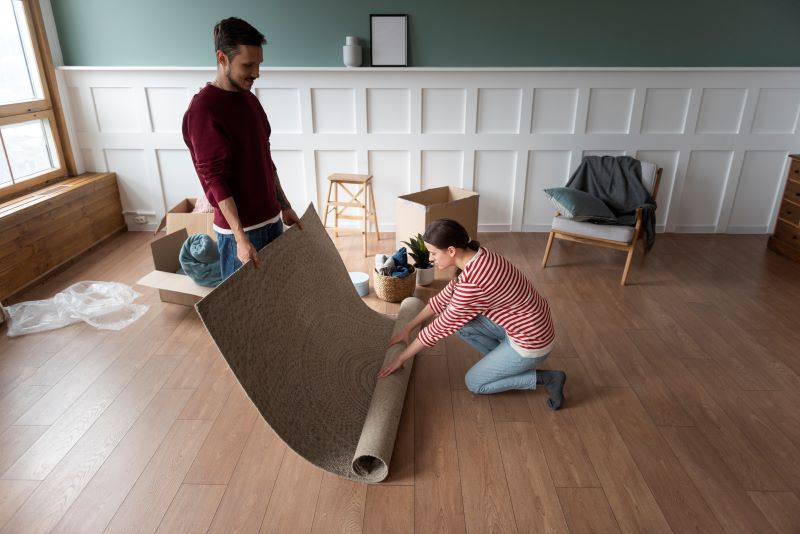
- Roll out the carpet. Lay the carpet over the underlay with a slight overlap at each wall. Use a knee kicker to stretch the carpet towards the gripper rods and hook it onto the teeth. Work from one side of the room to the opposite side.
- Trim the edges. Use a carpet knife to trim the excess along the skirting board, then tuck the edge neatly into the gap between the gripper rod and the wall using a bolster or tucking tool.
- Fit door bars at transitions. Where the carpet meets another floor surface, such as a hallway or landing, fit a door bar to create a clean, safe edge.
For most homeowners, professional fitting is the better option, particularly on larger rooms or awkward layouts. A qualified fitter will complete the job faster, with a cleaner finish, and with less risk of damaging the laminate beneath.
What Type of Carpet Works Best Over Laminate?
Not all carpets are equally suited to going over a hard floor like laminate. As a general rule, low to medium pile carpets perform best. They sit more stably, wear more evenly, and are less likely to shift underfoot.
Very thick or deep-pile carpets are best avoided in this scenario. They add significant height to the floor, which can cause door clearance issues, and they tend to feel less stable when laid over a floating floor. They’re also harder to keep clean and can compress unevenly over time.
Whatever pile you choose, carpet underlay plays a crucial role. A good underlay improves comfort, extends the life of the carpet, and helps the whole installation perform better.
Ready to Make the Change?
To tackle these challenges, consulting the flooring experts at TEKA Flooring might provide valuable insights into the best practices for this unconventional flooring combination. You can also select from a range of carpet options that can be tailored to match your personal preferences and home decor. Let’s visit our flooring store in Peterborough now!
Read Also: